A Moral Choice
Baruch Bush and the True Promise of Mediation

If I am not for myself who will be for me? But if I am only for myself what am I? ~ Jewish sage and scholar, Hillel
People often ask why the mediation approach I practice is called “transformative mediation” - what are we trying to transform, exactly?
I tell them that our goal is to transform the conflict interaction - to take negative, destructive interactions, where people feel confused, overwhelmed, and alienated from each other (the “vicious circle of conflict”), and transform them into positive, constructive ones, where people feel calm, confident, and connected with each other (the “virtuous circle”).
And we do this by supporting the participants as they make their own choices throughout the conversation.
Why does this help?
Because as human beings, we all have the inherent desire to take care of ourselves without harming anyone else. We want to connect with others in a positive way, while remaining true to ourselves. This is who we are at our best, and who we most want to be.
But conflict challenges these motivations and capacities, making it difficult to take care of ourselves and to connect with others. This is what people find most distressing about the experience of conflict - it’s less about the substance of the conflict or practical matters, and more about how we’re relating to ourselves and each other.
But this is good news - because people caught in the vicious circle want to get to a better place, we don’t need to push, pull, or nudge them there. Instead, when we support the participants in making their own choices, they’re able to regain the capacities that were temporarily disrupted by the conflict, and go where they naturally want to go - away from the vicious circle and toward the virtuous circle.
From there, people tend to have constructive conversations, solve their problems, and reach agreements they can feel good about.
That’s part of the story, but it isn’t the whole story.
The whole story was recently told (or re-told) by the late Baruch Bush, co-founder of the transformative approach, in the final article he published before passing: Self-Determination, Needs Satisfaction and Moral Growth – in Mediation and Negligence Law: A Paradigm Shift in Underlying Worldviews (“Moral Growth”).
In Moral Growth, Baruch explains that the true Promise of Mediation, which he and Joe Folger articulated in their 1994 seminal text, goes well beyond transforming the conflict interaction so that people can solve their problems and reach agreements they feel good about (although it does tend to accomplish that); the true promise is one of individual and societal transformation.
And this transformation is a moral one. “Moral,” in this sense, does not mean good versus bad, or right versus wrong (a misunderstanding that got the authors in a bit of hot water 30 years ago). Instead, acting morally means “giving regard or consideration to both self and other in deciding what to do, whatever the situation and whatever outcome emerges” (Moral Growth, p. 124). This “dual regard for self and other” (p. 127) is what spiritual traditions, philosophers, and scholars of the moral domain have long held to be the essence of a fully developed human being.
Because giving this dual regard is especially challenging in conflict, Bush and Folger pointed out that instead of viewing conflict as a problem to solve, it can be seen as an opportunity for the individuals involved to achieve moral growth. That is, through their own efforts to rise to the challenges conflict presents, mediation participants can actually increase their capacity for dual regard, and leave mediation more morally mature than they were before.
This is the promise of mediation that Bush and Folger envisioned 30 years ago - one that emphasized mediation’s potential to transform individuals (and by extension, society) in the direction of moral growth. But discussions of this promise faded into the background as transformation of the conflict interaction itself took center stage.
In the final years of his life, Baruch became clear that he wanted to bring the topic of moral growth back into the conversation. He understood the impact this kind of transformation could have on individuals and society, and the unique role mediators could play in fostering it.
So Baruch made the choice to return to the original inspiration for the Promise of Mediation, and to tell the story in a new way.
When announcing the article’s publication, Baruch shared his hopes and intentions with his fellow mediators:
…my true aim of this article is to draw attention to the moral dimension of transformative theory and practice. As the article says, “When mediators adhere to the ‘fundamental principle of self determination’, as they do in the transformative approach, it is because their practices rest on a Relational worldview that places supreme value on achieving moral growth. Transformative mediation theory valorizes moral growth; transformative mediation practice supports it.” And as the article concludes, my intention in publishing the article is “to strengthen the commitment of mediators who use relational, transformative practices -- and to encourage them to recognize and appreciate the moral value and impact of the work they are doing.” In the environment of conflict intervention work today, clarity about this value and impact is truly needed. I hope this article will help bring that clarity -- to all of you who are doing this challenging and vital work!!
Baruch Bush embodied the values he held dear. Instead of putting himself above those he served, he empathized with his clients and viewed them as heroes: “In a transformative mediation, the client, the party, the person whose life is involved, is a hero. To step up out of themselves, collect themselves, move toward each other… that’s heroic!”
And Baruch stood up for unpopular views throughout his career, even when he knew his life was nearing the end. Just three weeks before his passing, Baruch took the time to share the complete introduction he wrote to a new book on transformative mediation. Baruch loved the transformative approach and believed in its power to make a positive difference in the lives of others.
I know I am not alone in having been transformed by the approach, and by the man who devoted his life to bringing it to the world. I will be forever grateful for the gifts Baruch shared and for the opportunities I had to receive them.
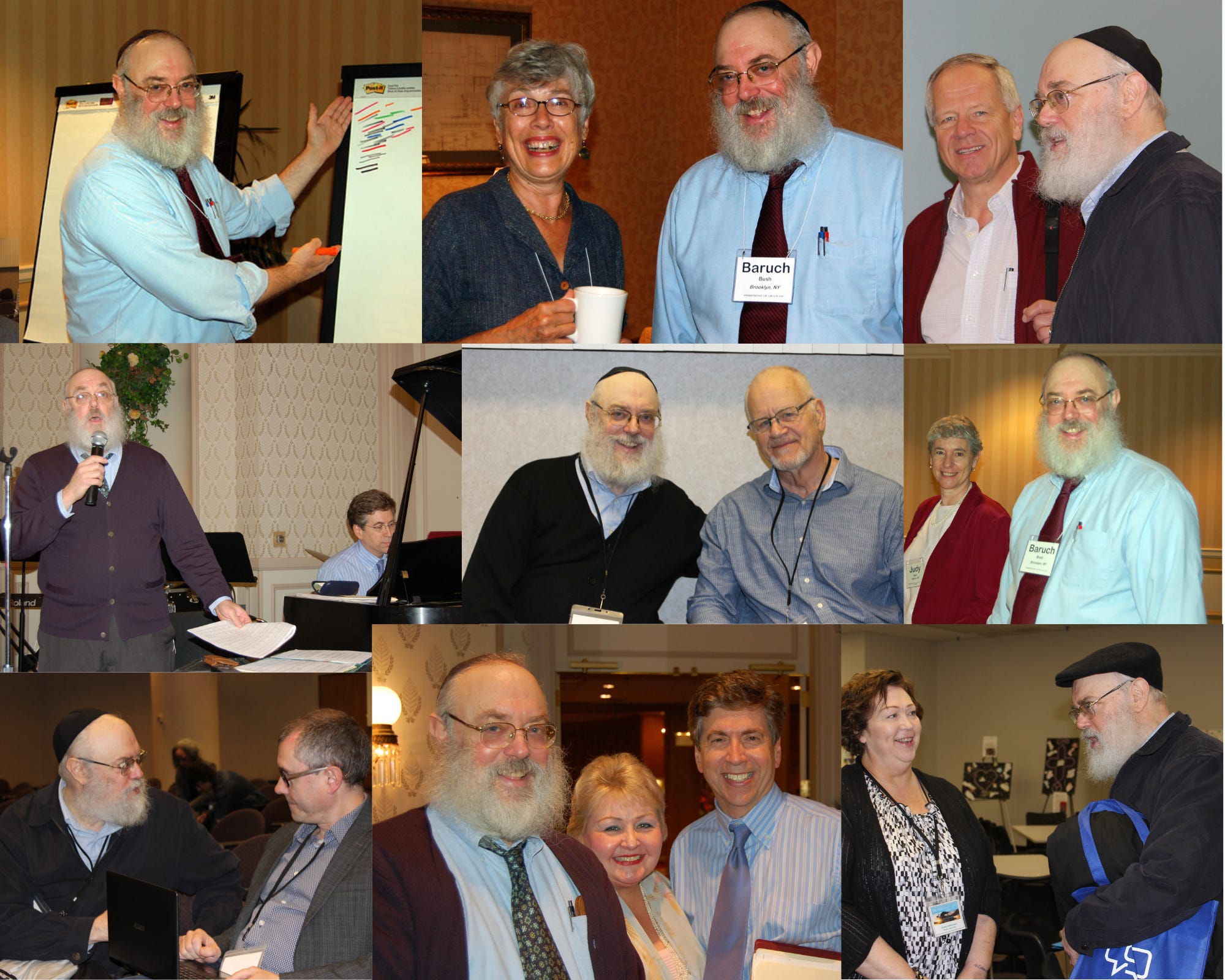
In loving memory of Robert A. Baruch Bush (1948-2026)
Important reminder of the roots the transformative approach. Great tribute. Thank you
I LOVE this. That's what I saw in conflict mediation, and that's precisely the one reason why I'm so attracted to it. This is profound and incredibly precious work. Thank you so much Tara.